Why Most Slot Players Never Beat the House (And How to Fix It)

There is a moment every casino player knows. You're sitting in front of a slot machine, your balance has just ticked past the point of no return, and a quiet voice in your head says, one more spin, one more hand, and I'll win it all back. That voice has cost gamblers more money than any rigged game ever has. The uncomfortable truth is that the house doesn't beat you because the games are unfair. It beats you because the math is stacked in its favor, and most players never adjust their behavior to account for it.
If you've been playing slots, blackjack, poker, or sports for a while and feel like the wins are always just out of reach, this article is for you. We're going to break down what actually separates players who walk away ahead from those who don't, and it has very little to do with luck.
Understanding the House Edge Is Not Optional
Every casino game has a built-in mathematical advantage for the operator. This is not a scam, and it's not negotiable. It's the business model. Blackjack played with perfect basic strategy gives the house roughly a 0.5% edge. European roulette is 2.7%. American roulette doubles it to 5.26% because of the extra double-zero pocket. Slot machines vary wildly, with RTPs usually landing between 92% and 97%.
Here's where players go wrong. A 96% RTP slot does not mean you get 96% of your money back in a session. It means over millions of spins, the machine returns 96% of all money wagered. In a single session, anything can happen. You might walk away with 10x your bankroll, or you might lose every cent. The RTP is a long-run average, and you are not the long run.
The actionable takeaway: choose games with the lowest house edge you're comfortable playing, and never assume a session will follow the average. This is explained well on สล็อต.
The Bankroll Rules That Actually Work
Most players treat their bankroll like a rough suggestion. They deposit what feels right, play until it's gone or they hit something, and repeat. That mindset is why they lose.
Here's a better framework:
- Decide your session budget before you log in. Not during. Not after you've lost three spins in a row.
- Split that budget into at least 100 units. If you have $200 for the night, your average bet should be $2 or less. That gives you real playtime and a chance to ride out variance.
- Set a win goal as well as a loss limit. If you double your session bankroll, walk away. Greed is the single most common reason players give back their winnings.
- Never chase losses. This is the cardinal rule. The game doesn't know you're down, and increasing your bet out of frustration only accelerates the bleed.
Nothing here is revolutionary, but the players who actually follow these rules are a small minority. That tells you everything.
Slot Volatility: The Overlooked Variable
RTP gets all the attention, but volatility matters just as much for how your session actually feels. Two slots with identical 96% RTPs can behave completely differently.
Low volatility slots pay small amounts frequently. Your balance drifts slowly. These are good for grinding out playtime on a modest budget. Think classic three-reel machines with simple paylines.
High volatility slots pay rarely but can hit enormous numbers when they do. Book of Dead-style games and modern Megaways titles fall into this category. You might go 200 spins without a meaningful win, then hit 500x your bet in a single bonus round.
Choosing the wrong volatility for your bankroll is a silent killer. If you bring $50 to a high-volatility slot with $5 spins, you're essentially buying lottery tickets. If you play a low-volatility slot expecting a jackpot, you'll be bored and disappointed. Match the game to your money and your temperament.
Poker Is a Skill Game, So Stop Playing It Like a Gambler
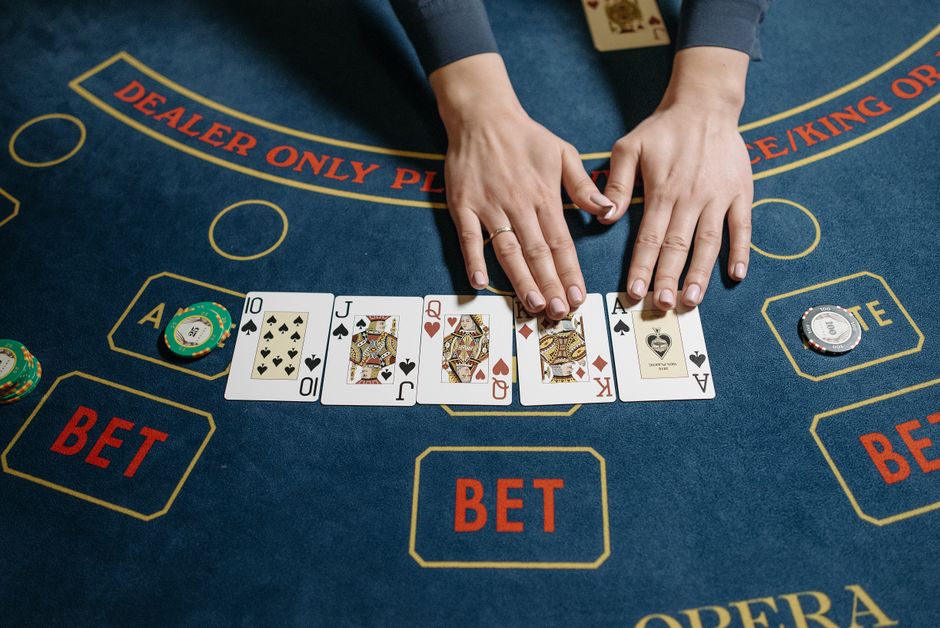
Poker is the one game in the casino where a skilled player can consistently beat the rake. That's the entire appeal, and it's also why so many recreational players lose. They're sitting at tables with people who have studied ranges, pot odds, and exploitative lines, and they're playing hunches.
If you want to be profitable at poker, the work happens away from the table:
- Learn positional play. Where you sit in relation to the button dictates how many hands you should play. Playing the same range from every position is a leak.
- Understand pot odds and equity. If you're drawing, you need the math to justify the call, not just a feeling.
- Review hands. Winning or losing is irrelevant. What matters is whether your decision was correct given the information available.
- Bankroll properly. Cash game players should have at least 20 buy-ins for the stakes they play. Tournament players need more, often 50 to 100 buy-ins, because variance is brutal.
The players who ignore these principles are the ones funding the players who don't. It's that simple.
Betting Markets Reward Information, Not Loyalty
Sports betting attracts a different kind of player, and it's where discipline often goes out the window. Betting on your favorite team feels good until you realize affection is not an edge.
The foundation of profitable betting is finding value, which means identifying situations where the implied probability of the odds is lower than the true probability of the outcome. A coin flip should be priced at even odds. If a bookmaker offers you 2.10 on a genuine coin flip, that's value. If they offer 1.85, you're bleeding money over time.
Sharps focus on specific markets they understand deeply. They track line movement, injury reports, weather, and historical trends. They treat betting like a business with a P&L, not a weekend hobby. If you're betting recreationally, that's completely fine, but be honest about it and set hard limits. If you're trying to profit, treat it with the rigor any edge requires.
The One Habit That Changes Everything
If there's a single thread connecting every losing player, it's the absence of honest record-keeping. Winners track everything. Losses, wins, stakes, session length, emotional state. They know their actual ROI down to the decimal because feelings lie and spreadsheets don't.
When you log every session, patterns emerge. You might discover you lose more after 11 p.m., or that you play your worst after a big win, or that a particular game has never shown a profit. That data is worth more than any tip or system. Without it, you're guessing, and the house never guesses.
A Final Word on Playing Smart
The iGaming world is enormous, and it's designed to be entertaining. There's nothing wrong with enjoying slots, poker, betting, and everything in between. The problem is when entertainment turns into a leak you can't plug. The players who last are the ones who accept the math, respect their limits, and treat randomness as a feature of the game rather than an enemy to outsmart.
You're not going to beat the house at slots. You're not going to outrun variance in a single session. But you can absolutely play longer, play smarter, and avoid the mistakes that bleed money from nearly every recreational player. That's not a guarantee of profit, but it is the closest thing to an edge that most of us will ever get.