Stayman Convention: When to Use It and When to Avoid It
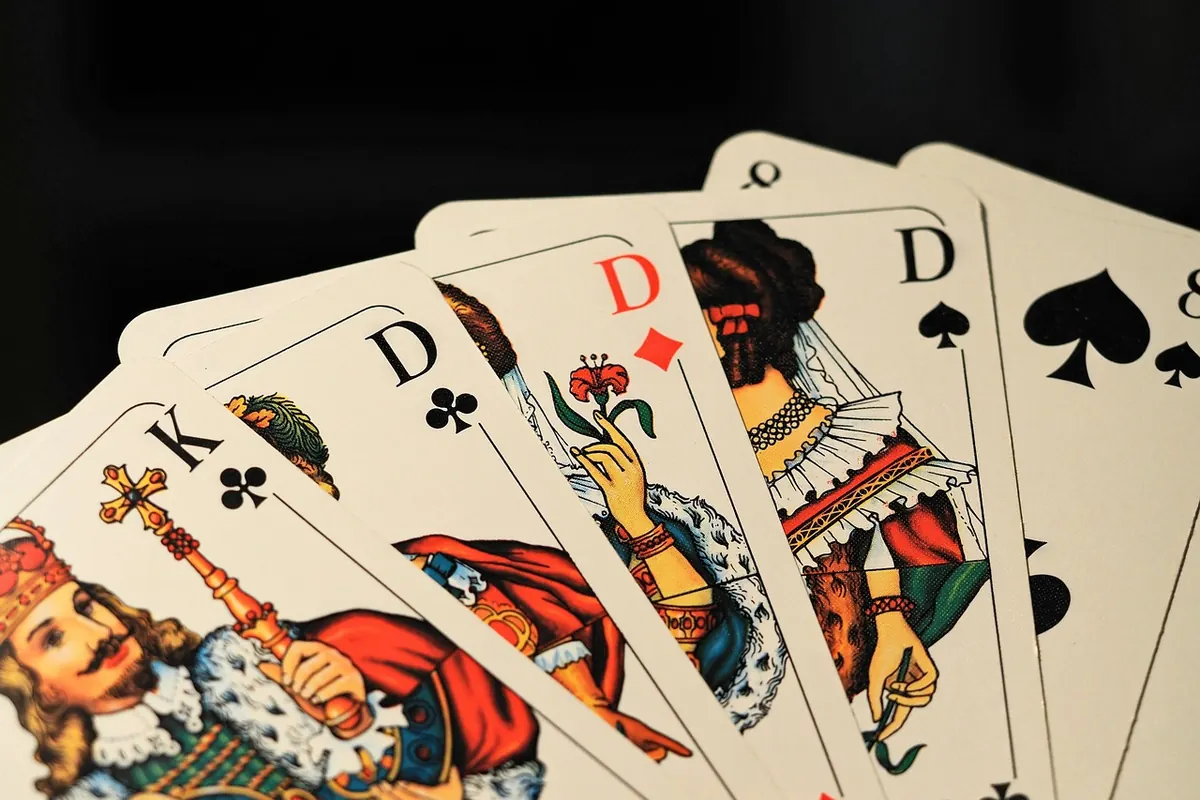
Two clubs is the hardest-working bid in the game. It shows a monster after a one-level opening, it asks for a major after 1NT, and it occasionally means nothing at all. Stayman is that middle job, and it comes up several times a session. Used well, it finds a 4–4 fit that no-trump could never match. Used by habit, it hands the defenders a map of your hand and turns a comfortable 1NT into a minus score. The trick is knowing which is which before you put the card on the table.
What 2♣ Actually Asks
After partner opens 1NT, a response of 2♣ is Stayman: "Partner, do you have a four-card major?" The replies are fixed.
- 2♦ — no four-card major.
- 2♥ — four or more hearts, and may also hold four spades.
- 2♠ — four spades, denying four hearts.
Note the order. With four cards in both majors, opener bids hearts first, so responder can still find a spade fit at the two level.
In England, the EBU asks you to announce 2♣ rather than alert it — say the word "Stayman" as it goes in. Check local regulations if you play elsewhere. And one warning worth repeating: 2♣ is forcing. You cannot pass it. If you hold a weak hand and a long club suit, that is not a reason to bid 2♣; find another route.
When Stayman Earns Its Keep
The textbook requirement is eight or more points and at least one four-card major. That is a reasonable starting point, but the real test is whether you can cope with all three replies. If you can, bid it.
- Invitational hands, 8–9 points, with a four-card major. Raise partner's major to the three level, or rebid 2NT if partner denies. Partner then makes the final decision.
- Game-going hands, 10 points or more, with a four-card major. Raise to game in the fit, or bid 3NT over 2♦.
- Both majors with game values. Let partner choose. A 4–4 major fit usually plays a trick better than no-trump.
- Weak hands, 4–4 or better in the majors, short in clubs. This is "garbage" or "drop dead" Stayman: bid 2♣ and pass whatever comes back. You escape 1NT into a major partscore. Agree it with partner first, because it changes what 2♣ promises.
When to Avoid It
Most Stayman disasters come from bidding it with the wrong shape rather than the wrong point count.
- A five-card major. Use a transfer instead. A transfer lets the strong hand play the contract and keeps the opponents in the dark; Stayman does neither. With five spades and a balanced 11 points, transfer and then bid 3NT to offer partner the choice.
- A hand built around a long minor. With a good six-card diamond suit and a four-card major, Stayman can bury the suit that ought to be trumps. If the minor is the point of the hand, look for a transfer or a forcing minor-suit bid first.
- A flat 6–7 points and one four-card major. Pass 1NT. Opposite a weak no-trump you are not missing game, and 2♣ will drag you to the three level too often when partner denies a major.
- Any hand where 2♦ leaves you stranded. If a 2♦ reply makes you guess, you never had a Stayman bid.
- Passing a 2♣ response. It is forcing, and passing it is one of the most common accidents in club bridge. Announce first, then think.
One more thing. After 1NT–2♣–2♥, a bid of 2♠ does not mean "I have spades too". Partnerships give it various meanings, often a game force with longer hearts or a slam try. Agree it before you trot it out.
What Happens After the Answer
The auction does not end with 2♦, 2♥ or 2♠. Have the follow-ups clear in your head before you bid 2♣.
After 1NT–2♣–2♦
- 2NT: invitational, around 8–9 points, no major fit available.
- 3NT: game values, no four-card major with opener.
- A major at the three level, if you have agreed that treatment: five cards there, game forcing, asking opener for three-card support.
After 1NT–2♣–2♥ or 2♠
- A raise to the three level: game forcing with a fit, and mild slam interest.
- A raise to game: a fit, no slam ambitions. Take the plus score.
- 2NT: invitational, typically only three-card support or a hand that prefers no-trump.
- 3NT: a fit exists, but the hand looks like nine tricks in no-trump.
Two principles cover most of these auctions. Once you have found a major fit, a jump to game is a sign-off, not an invitation. And a rebid of 2NT after Stayman is always invitational, while 3NT is always to play.
Three Hands to Try
Hand one: ♠K J 8 4 ♥Q 7 ♦A 9 5 2 ♣8 6 3. Nine points, four spades, balanced. Bid 2♣. If partner shows spades, raise to 3♠; over 2♥ or 2♦, bid 2NT. Partner has the final word, and you have described your hand exactly.
Hand two: ♠A K J 6 3 ♥8 4 ♦Q 7 2 ♣J 6 3. Eleven points, but five spades. Do not bid 2♣. Transfer to 2♠ and then rebid 3NT, offering partner the choice between 3NT and 4♠. You have shown five spades, game values and a genuine doubt about the best contract.
Hand three: ♠K Q 7 4 ♥A J 6 2 ♦K 5 ♣Q 8 4. Fifteen points, both majors. Bid 2♣. Raise 2♥ to 4♥, raise 2♠ to 4♠, and bid 3NT over 2♦. Do not settle for 3NT over a major response; 4–4 fits are worth taking at pairs and teams alike.
Take This to the Table
Stayman is a tool, not a reflex. Before you reach for 2♣, run three quick questions: do I have a four-card major, can I handle all three replies, and would a transfer do the job better? If the answer to the last one is yes, use the transfer.
Then agree the details with your regular partner — whether you play garbage Stayman, what the three-level major rebids mean, and whether 2NT after a major shows three-card support. Ten minutes of conversation saves a great many bad boards. And when 2♣ goes down on the table, say the word clearly, so that everyone knows exactly what is happening.
Photo: Ralf1403 / Pixabay